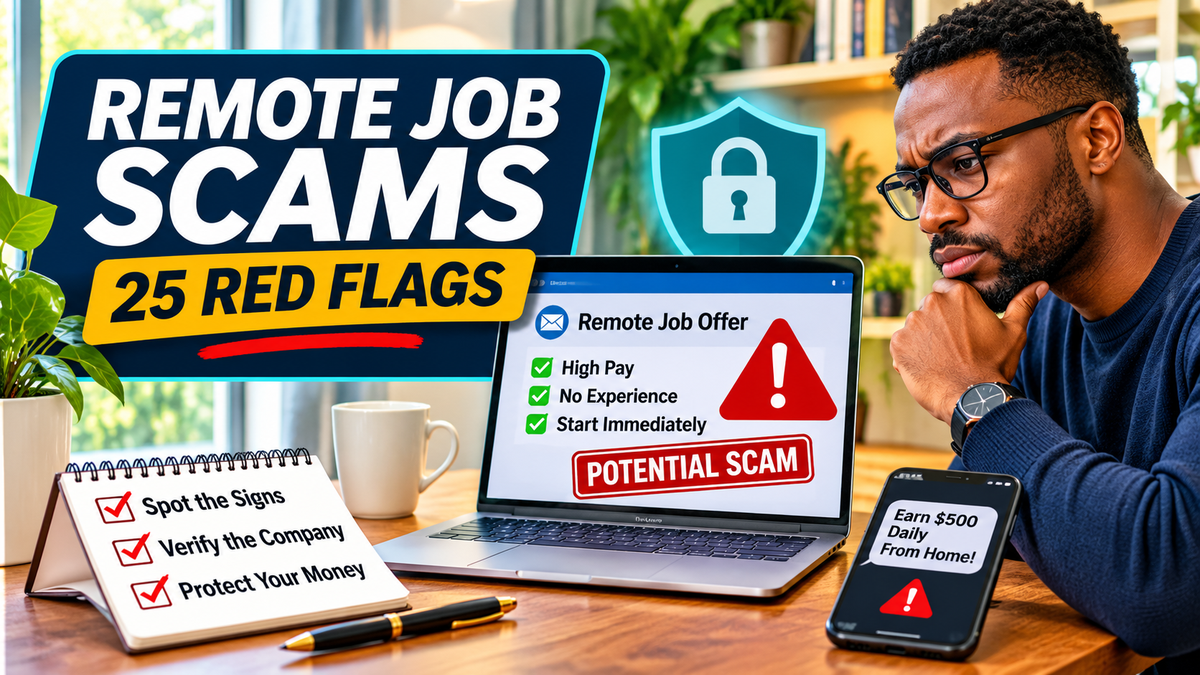
Remote work can give you more flexibility, reduce commuting, and open opportunities beyond your hometown. But finding a genuine work-from-home job requires something else: knowing how to recognize people who are pretending to hire you.
A fake recruiter might copy a real company’s logo, advertise a generous salary, arrange a chat interview, and send an offer letter that looks convincing. Another might promise small commissions for rating products or clicking buttons. Others offer jobs receiving packages or processing payments. Their advertisements look different, but their goals are often the same: to obtain your money, personal information, or access to your accounts.
The U.S. Federal Trade Commission (FTC) has warned about fake recruiters, work-from-home offers, fraudulent checks, and task-based job scams. The FBI’s Internet Crime Complaint Center (IC3) has separately warned about fake online work that requires cryptocurrency payments. The common thread is not simply that an opportunity sounds unusual; it is that someone uses a supposed job to push you into an unsafe transaction or disclose sensitive information. FTC: Avoid work-from-home job scams | FBI: Work-from-home scams
This guide explains 25 work from home scam red flags, how to check an employer before applying, what legitimate hiring generally looks like, and what to do if you have already shared information or sent money. Individual warning signs are not always conclusive. The safest approach is to evaluate the whole situation and independently verify the employer.
Quick Answer: What Are the Biggest Work From Home Scam Red Flags?
The strongest danger signals are a recruiter asking you to pay to get hired, deposit a check and send money elsewhere, buy cryptocurrency to unlock online tasks, use your personal bank account to transfer business funds, or receive and reship merchandise from your home. Other warnings include offers that arrive unexpectedly by messaging app, requests for your Social Security number before a verified hiring process, and pressure to make an immediate decision.
A real employer can recruit quickly, communicate online, or hire beginners. Those details alone do not prove fraud. The critical question is whether you can confirm who is hiring, what work you will perform, how you will be paid, and whether any proposed payment or information request is legitimate. FTC job scam guidance
25 Work From Home Scam Red Flags to Know
1. Extremely High Pay for Very Little Work
Advertisements such as “Make $500 every day from your phone” or “Earn a full-time salary for 30 minutes of clicking” are designed to catch attention. Some remote jobs do pay well, but pay normally reflects responsibilities, experience, market rates, productivity, or a clearly defined commission arrangement. When the offer focuses almost entirely on money and barely mentions deliverables, treat it with skepticism.
Compare the advertised salary with similar jobs on actual employer careers pages. Ask what the worker produces, how success is measured, and whether the compensation is hourly, salaried, per task, or commission-based. If the recruiter will not explain the work, there may be no genuine position behind the attractive numbers.
2. An Unexpected Text, WhatsApp, or Telegram Job Offer
You receive a message from an unfamiliar number: “We saw your profile. Reply YES for an easy remote role.” You did not apply, the sender does not mention your experience, and the company name is missing or vague. The FTC has warned about precisely this style of unsolicited recruitment message, including messages asking people to reply before they receive meaningful details.
Real recruiters sometimes reach out to candidates who have not applied, so an initial contact is not proof of fraud. However, an unexpected message coupled with vague duties, pressure, or financial requests is a strong reason to disengage. Find the company independently rather than using the sender’s links. FTC: Job offer text warnings
3. You Are Hired Almost Immediately Without Meaningful Screening
A supposed employer announces you have been selected after a few messages and asks for bank information to start payroll. Genuine entry-level hiring may be simple, but employers usually establish that a candidate can perform the role and explain the terms before onboarding. Fraudsters often skip these steps because they are not trying to assess your abilities.
Be especially careful if a “chat interview” focuses on collecting identification or financial details instead of discussing job responsibilities. Ask for the formal job posting, a verifiable company contact, and a written explanation of the hiring process. Even an official-looking offer letter can be fabricated.
4. You Must Pay an Application, Training, or Registration Fee to Get Hired
Scammers use labels such as enrollment fee, refundable deposit, software activation, starter kit, or mandatory training charge. They may claim the payment is required to reserve your position. The FTC’s advice is straightforward: do not pay for the promise of a job. A genuine employer should not require you to pay a recruiter or unknown vendor to unlock employment.
Some professions require legitimate licensing or certifications purchased independently. That is different from an unverified recruiter demanding money as a condition of receiving a specific job offer. Verify any credential requirement with the appropriate licensing authority. Never send money to an individual’s personal account because someone says it is company policy.
5. They Send a Check and Tell You to Purchase Equipment
This scheme often begins with a convincing offer for remote customer service or administrative work. The “employer” sends a check for a laptop and asks you to deposit it, then pay a designated supplier. Your bank might make funds available before discovering that the check is fraudulent. When the check is reversed, you can be responsible for the money you transferred out.
A reputable employer might provide equipment or reimburse approved purchases, but depositing a surprise check and forwarding funds to a stranger is an entirely different arrangement. Do not buy equipment through a recruiter-selected vendor using check proceeds. Contact the financial institution immediately if you have already deposited a suspicious check. FTC: Fake job checks
6. The Job Involves Receiving and Reshipping Packages
Titles like “package inspector,” “quality control manager,” and “shipping coordinator” can hide a reshipping scam. A fake employer sends items to your home and instructs you to remove packaging, inspect the goods, and forward them elsewhere. The merchandise may have been bought using stolen payment information, and the promised paycheck may never arrive.
A home address is not a substitute for a verified logistics operation. The FTC explicitly warns that these reshipping offers are scams. Do not agree to forward parcels for an unknown employer, even if it provides a web dashboard or professional-looking instructions. If packages have already arrived, seek guidance from the delivery carrier or relevant authorities rather than forwarding them. FTC: Reshipping scams
7. Sensitive Personal Information Is Requested Too Early
Legitimate U.S. employers need tax and payroll information at the appropriate onboarding stage. They may also verify identity as part of lawful hiring. The danger is a stranger demanding your Social Security number, passport photo, driver’s license, bank login, or direct-deposit form before you have verified the company and offer.
A stolen identity can lead to fraudulent accounts, tax problems, or attempted financial theft. Never assume a form is trustworthy because it includes a well-known logo. Verify the employer’s official domain and communication channels first. A real hiring process should give you a clear, secure explanation of when information is needed and how it will be protected.
8. The Recruiter’s Email Domain Does Not Match the Employer
An email claiming to come from a large corporation but sent through a personal Gmail address, a misspelled company domain, or an unrelated recruiting domain deserves careful review. For example, an extra letter or an inserted hyphen can make a fake URL look almost identical to the real one.
Some legitimate small businesses use consumer email services, and staffing agencies may use their own domains. Do not rely on the email address alone. Check the company’s authentic website, locate its careers information independently, and ask its human-resources team whether the recruiter and position are genuine. Avoid calling telephone numbers provided only in the suspicious message.
9. The Job Description Never Explains the Actual Work
“Flexible online opportunity, immediate earnings, unlimited bonuses” tells you very little about what you would do each day. A useful job description should identify primary responsibilities, work arrangement, qualifications, expected availability, and compensation structure. A vague advertisement may be a poorly written genuine listing, but it is also a common feature of scam promotions.
Ask what software or equipment the role requires, how tasks are assigned, who reviews the work, and when payment occurs. Be wary if every answer circles back to earnings instead of duties. Grammar is not a reliable test: scammers can generate polished descriptions, and authentic small employers sometimes write imperfect ones.
10. You Are Pressured to Accept the Job Immediately
A recruiter says the position closes in an hour, demands that you sign before asking questions, or threatens to withdraw the offer if you do not pay right away. Real businesses can have deadlines, but they should not prevent candidates from verifying the employer, reading terms, or discussing a financial request.
Pressure works by making hesitation feel costly. Slow the exchange down. Ask for written details and independently verify them. If the sender reacts aggressively to reasonable questions, that reaction provides useful information about the risk. Urgency is most concerning when paired with requests for money, personal documents, or unusual account access.
11. The Recruiter Insists on Moving Off a Trusted Platform
A person contacts you on a job board or freelance marketplace, then quickly insists you communicate only through a private Telegram account or an external link. Some legitimate recruiters schedule phone and video meetings outside a platform, but scammers may move conversations to avoid moderation, payment protections, or recordkeeping.
If you are using a freelance platform, read its communication and payment rules before leaving. Keep copies of messages, job descriptions, and contracts. An employer who refuses all verifiable business channels while demanding that you continue in an anonymous chat is not a safe prospect.
12. The Company’s Website Has No Verifiable Business History
A polished website is easy to create. Logos, stock photos, glowing testimonials, and a contact form do not establish that the business exists. Compare the site with independent sources such as business registries, established company profiles, professional contact information, and employees’ public work histories.
A new company can be legitimate, so a recently registered domain is not automatic proof of fraud. The concern is a collection of inconsistencies: a copied address, nonworking telephone number, invented staff, or a careers page no one at the company can confirm. Treat the website as a lead to investigate, not as independent verification of itself.
13. They Promise Guaranteed Earnings or Guaranteed Approval
Job advertisements sometimes claim “guaranteed $1,000 weekly,” “approved instantly,” or “earn unlimited commissions.” Guaranteed pay under a real employment agreement is not inherently suspicious. What matters is whether the promise is tied to actual duties, conditions, hours, or contract terms.
If an online platform shows exciting earnings before you have performed meaningful work, ask whether those figures can genuinely be withdrawn and whether any fee is required. A fake dashboard may display numbers that do not correspond to real money. Never treat an on-screen balance as proof that a company owes you accessible funds.
14. The Job Requires Your Personal Bank Account to Transfer Money
A fake “payment processor” position may instruct you to receive funds into your bank account and forward them to clients, vendors, or cryptocurrency wallets. This can make you an unwitting money mule—someone used to move potentially illicit proceeds. The FBI warns that employment scams are one route through which criminals recruit money mules.
A genuine company should use its own authorized business accounts and controlled payment processes. Do not allow a supposed employer to turn your personal account into a clearinghouse. If this has already happened, contact your bank immediately and seek guidance about reporting the transactions. FBI: Money mules
15. They Demand Gift Cards, Cryptocurrency, or Hard-to-Reverse Payments
A recruiter tells you to buy gift cards for onboarding, use a payment app to “verify” your employment, or transfer cryptocurrency to begin work. These requests are major warning signs because they move money from the candidate to the supposed employer with little consumer protection.
Payment apps have legitimate business uses; the problem is being asked to send money to obtain a job or release supposed wages. Never read out gift-card codes, fund a cryptocurrency wallet for an employer, or pay withdrawal fees to access a fake work balance. Contact your bank or payment provider immediately if you have already paid. FTC: Payment-related scam signs
16. The Recruiter Cannot Answer Basic Questions
Ask ordinary questions: Who is the hiring manager? Which legal entity will employ me? What are the job duties and hours? What is the salary or project rate? Where is the official listing? How is onboarding handled? What equipment is required?
A recruiter may need to confirm details with a manager, and that is normal. The warning comes when answers are evasive, contradictory, or copied from a script—especially when the sender continues asking you for money or sensitive information. You deserve enough verifiable information to make a decision. If none is available, do not progress simply because the recruiter sounds reassuring.
17. Testimonials and Earnings Screenshots Look Too Perfect
Fake employers sometimes publish dramatic success stories: a beginner who earned thousands in a few days or a worker who supposedly quit their job after one week. Screenshots of balances, five-star reviews, and video testimonials can be fabricated or selectively presented.
Do not judge a position by testimonials alone. Look for independently verifiable experiences and realistic descriptions of the work. A company with no credible business details but dozens of identical glowing reviews merits investigation. Even authentic testimonials do not prove what a new applicant will earn; individual outcomes and compensation terms vary.
18. “No Experience” Is Paired With “No Screening” and “Instant Money”
There are legitimate entry-level remote positions, including support, administrative, scheduling, and other roles for which employers may provide training. But hiring beginners still involves expectations: written communication, reliability, computer familiarity, schedule availability, or task-specific skills.
A listing promising no application, no interviews, no skills, unlimited openings, and immediate high pay gives you little basis for believing any real work exists. Focus on roles that describe training, supervision, responsibilities, and pay. A legitimate opportunity should not require you to ignore common sense because the advertisement says anyone can qualify.
19. A Freelance Client Refuses Clear Scope or Payment Terms
A freelancer may be asked to complete writing, design, translation, data entry, or research before any agreement about price and payment. A short, compensated sample can sometimes be reasonable. A large unpaid “test project,” vague scope, or demand for a fee to receive payment can be exploitative or fraudulent.
Before starting, confirm the exact deliverables, deadline, revision limits, amount, payment schedule, and permitted payment method. Where appropriate, use a platform’s milestones or escrow protections. Avoid unauthorized off-platform payments if the marketplace forbids them. A serious client should be willing to describe the work and terms clearly.
20. A Real Company Name Is Used in an Unverifiable Offer
One of the most convincing tactics is impersonation. A scammer borrows an established employer’s name, logo, job titles, or employee identities, then posts a position that the real company never approved. Some even copy genuine listings and alter the application link.
Find the real organization’s careers page yourself. Compare job identifiers, location, duties, and application instructions. If the role is missing, ask the organization through an independently obtained channel. Remember that a real company can also use an external applicant-tracking platform, so the destination domain alone is not the final test. FTC: Hijacked job ads
21. The Job Pays for Clicking, Rating, “Optimizing,” or Boosting Products
Task scams advertise effortless online work such as rating restaurants, liking videos, boosting product listings, or pressing buttons to “optimize” a service. A fake platform shows your balance growing, sometimes after a small initial payout intended to build trust. The next step is a demand to deposit your own money to unlock additional assignments or withdraw your supposed earnings.
The FTC and FBI warn about this pattern. Genuine paid usability testing or content work can exist, but a job that requires repeated deposits to generate or release earnings is not legitimate. Stop as soon as the platform asks you to pay to continue. FTC: Task scams
22. You Must Open Financial or Marketplace Accounts in Your Name
A supposed employer asks you to open a bank account, cryptocurrency exchange account, seller account, or telephone account under your personal identity, then hand over access. This could expose you to fraud, unpaid charges, or transactions conducted in your name without your understanding.
Legitimate business accounts should be established with proper ownership and authorization. Do not give an employer your personal passwords, authentication codes, or unrestricted access to financial accounts. If a role genuinely requires managing company tools, the business should explain how authorized company-owned access will be provided and controlled.
23. They Request Remote Access to Your Computer Before Hiring
A recruiter says you must install screen-sharing or remote-control software so an “IT specialist” can configure your home office. Support software is a real business tool, but it also gives strangers a way to see sensitive information or control a device.
Do not let an unverified recruiter connect to your personal computer, phone, email, or bank account. After verified hiring, legitimate IT departments can explain their equipment policies, approved installers, and support procedures. If you have already given a suspicious party access, disconnect the session, secure the device, and change affected passwords from a clean device.
24. Compensation Terms Are Confusing or Keep Changing
One conversation promises an hourly wage, the next mentions points, bonuses, cryptocurrency commissions, or a “negative balance” that must be cleared. You should be able to understand what triggers payment, when it occurs, and whether deductions or expenses apply before working.
Confusion is not always proof of fraud, particularly in complex commission arrangements, but unexplained changes and invented withdrawal barriers are serious concerns. Ask for compensation terms in writing. If the recruiter refuses to specify what you will be paid, or insists that you fund an account before receiving wages, stop participating.
25. The Recruiter Uses Fear, Flattery, or Personal Pressure
Job scams do not always begin with technical tricks. A scammer may become unusually friendly, invoke a personal connection, flatter your abilities, or insist that an offer is a once-in-a-lifetime chance. Others switch to threats: your account will be frozen, your money will disappear, or you will face penalties unless you pay.
Professional recruitment should not require a stranger to control your emotions. If the conversation turns intense, end the discussion and seek an independent opinion. Save the messages and verify any claim through the real business. The more the sender needs you to act before thinking, the less reason you have to trust the offer.
How to Verify a Remote Job Before You Apply: An Eight-Step Process
Step 1: Find the official employer website yourself. Search for the organization independently instead of using only a link from a message. Confirm that the business actually operates in the industry described. Beware of sponsored search results and look-alike domains; a company website is only one piece of evidence.
Step 2: Check the opening. Look for the position in the employer’s careers section or applicant-tracking system. Compare title, posting number, location eligibility, salary, and duties. If you cannot find it, contact human resources through a verified contact method.
Step 3: Verify the recruiter’s identity. Compare the sender’s email domain and claimed role with official company information. A real-looking LinkedIn profile is helpful context, not definitive proof. An impostor can copy photos and names.
Step 4: Read the job and payment terms. Confirm whether the arrangement is employment or contracting; understand the hours, reporting line, compensation, and equipment policy. For freelance projects, agree on scope and payment milestones before beginning substantial work.
Step 5: Watch for financial requests. Never pay to be hired, deposit suspicious checks and send proceeds elsewhere, use your own account to transfer client money, or buy cryptocurrency to unlock work. These behaviors are stronger evidence of fraud than a typo in an email.
Step 6: Protect sensitive information. Wait until the organization and hiring process are verified before submitting tax, identity, or payroll information. Use an authorized secure onboarding portal, not an unfamiliar link received in an unsolicited chat.
Step 7: Search for independent warnings. Combine the company or recruiter name with terms such as scam, complaint, and reviews. Examine the source and date of reports. A lack of complaints does not prove legitimacy, particularly if the website is new.
Step 8: Ask a person you trust to review the offer. Explaining a suspicious situation to someone else can reveal contradictions that are easy to miss when you urgently need work. Take the time to verify; a genuine opportunity should withstand sensible questions.
Real Job Versus Fake Offer: A Practical Comparison
| What to check | More reassuring signs | Strong warning signs |
| Job details | Specific responsibilities, supervisor, and schedule | Vague duties and unrealistic income claims |
| Employer identity | Independent confirmation through official channels | Only an unverified social profile or messaging number |
| Interviews | Relevant conversations or assessments | Instant hire followed by requests for money or IDs |
| Payment | Written pay terms and secure payroll | Fees, crypto deposits, gift cards, or surprise check transfers |
| Equipment | Documented company process | Check deposited into your account, then pay a specified vendor |
| Personal data | Appropriate collection after verified onboarding | SSN and bank details requested before validation |
| Communications | Consistent, traceable professional contacts | Evasive answers and pressure to use anonymous chat |
This comparison is a guide, not an automatic scoring system. Some legitimate jobs have unusual schedules or informal interviews; a skilled scammer can also imitate professional processes. Verify the facts rather than trusting superficial appearances.
What to Do If You Already Responded to a Fake Job Offer
If you sent money: Contact your bank, card issuer, wire service, gift-card issuer, or payment app immediately. Tell them it was fraud and ask whether the transfer can be stopped or reversed. Refunds are not guaranteed, and the correct process depends on how you paid. Follow the FTC’s payment-specific recovery steps: What to do if you were scammed.
If you shared a Social Security number or identity documents: Visit IdentityTheft.gov for a personalized recovery plan. Consider a fraud alert or credit freeze, monitor financial accounts, and report unauthorized activity. Change passwords if login credentials were exposed.
If you deposited a questionable check: Contact your bank promptly, explain the circumstances, and do not spend or transfer the funds. Preserve copies of the check and related messages. Bank funds availability does not mean the check is genuine.
If you installed remote-access software: Disconnect access, secure the device, and use a trusted device to change important passwords. Review bank and email activity, enable multifactor authentication, and get technical help if you suspect malware or persistent remote access.
If you received packages or moved money: Stop forwarding items or funds. Contact the bank or carrier and seek appropriate guidance. Keep the shipment records, tracking numbers, and communications; do not destroy evidence.
Report the incident: In the United States, submit consumer-fraud reports at ReportFraud.ftc.gov and cybercrime complaints at IC3.gov. Report the fake listing to the platform where it appeared and notify the legitimate company being impersonated. Reporting may help others, even if you cannot recover a loss.
Beware of recovery scams: someone may promise to retrieve lost money or cryptocurrency for an advance fee. Do not pay another stranger to undo the first scam.
Where to Search for Safer Remote Job Opportunities
Start with verified employers’ careers pages, reputable staffing agencies, established job boards, professional associations, and university career centers. When you see a listing on a general job board, try to confirm it through the employer itself. The same caution applies to social media, messaging groups, and freelance marketplaces.
Useful searches include remote customer support official careers, entry-level remote administrative jobs, remote jobs with training, and a specific employer name followed by careers. These phrases can help you narrow your search, but no keyword makes search results scam-proof. Be skeptical of anyone promising a secret list of guaranteed jobs or charging a fee simply to reveal ordinary public openings.
Frequently Asked Questions About Work From Home Scams
Are all remote jobs without experience scams?
No. Some entry-level remote jobs provide training. Look for realistic expectations, a genuine employer, a verifiable hiring process, and clear compensation. No-experience claims become concerning when paired with instant approval, extravagant pay, or requests for money.
Is a WhatsApp interview automatically fake?
Not automatically, but unsolicited offers and an entire hiring process conducted by anonymous chat merit extra scrutiny. Insist on independent verification of the employer and recruiter. Never send identity or financial details merely because the interviewer claims to represent a recognizable company.
Can a legitimate company ask me to buy a computer?
Some legitimate work arrangements require you to supply equipment or provide documented reimbursement. The classic scam is receiving a check and being instructed to send some of the proceeds to a specified vendor. Do not make that transfer.
Can an employer request my Social Security number?
A legitimate U.S. employer may need it for lawful employment and payroll administration after appropriate verification. The warning is an unverified stranger requesting sensitive data before a genuine hiring or onboarding process.
What are online task scams?
They are fake jobs involving repetitive actions such as ratings, clicks, or product “optimization.” The platform may show false commissions or pay a small amount initially, then require deposits—often cryptocurrency—to unlock work or withdraw earnings. That demand for your money is the critical danger signal.
Is a professional-looking company website enough to prove a job is real?
No. Scammers can copy real company branding, register look-alike domains, and invent staff profiles. Independently verify the employer, the job posting, and the recruiter through trusted channels.
What should I do if a recruiter asks me to reship packages?
Do not accept the task. The FTC identifies work-from-home reshipping offers as scams that can involve merchandise purchased with stolen financial information. Preserve the communication and consider reporting it.
What if I already paid a fake recruiter?
Act immediately. Contact the payment provider, explain that it was fraud, request any available reversal, and save supporting records. Report the incident to the FTC and, if appropriate, IC3. Recovery depends on the payment method and circumstances.
Final Checklist Before You Accept a Remote Job
- Can I independently confirm the company and the specific job opening?
- Does the recruiter have a verifiable professional connection to the employer?
- Do I understand the duties, schedule, and written payment terms?
- Has the employer evaluated my suitability through a credible process?
- Am I being asked to pay fees, fund tasks, buy gift cards, or send cryptocurrency?
- Am I being told to deposit a check and forward money or purchase equipment?
- Would the role require me to reship packages or move funds through my bank account?
- Are identity documents requested only through an appropriate, verified onboarding process?
- Is the offer free from threats, secrecy, and unreasonable pressure?
- Have I reviewed the offer with an independent, trusted person if anything seems wrong?
If the answers reveal serious financial or identity risks, do not proceed until you have independent confirmation. A missed opportunity is frustrating; losing savings or control of your identity can be far more damaging.
Conclusion: Verify the Opportunity, Not Just the Advertisement
The best protection against fake remote jobs is not memorizing every scam script. Fraudsters change their wording, impersonate new companies, and redesign their websites. What remains consistent is the attempt to bypass independent verification and push you toward money transfers, sensitive disclosures, or risky tasks.
Never pay for the promise of a job. Never forward suspicious check proceeds. Never use your personal accounts to move money for an unknown employer. Verify the business, confirm the position, understand the work, and protect your information. Real remote opportunities exist, and careful checks help you pursue them with greater confidence.
Sources and Further Reading
- Federal Trade Commission — How to avoid work-from-home job scams
Share this: